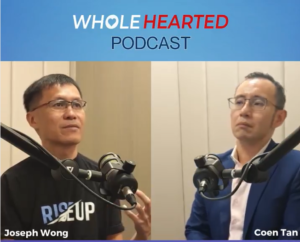
Leadership today is not about the leader — it’s about the people they lift, empower, and grow. This is the foundation of human-centered leadership, a mindset that reframes leadership from authority and control to empathy, presence, and collective development.Lorem ipsum dolor sit amet, consectetur adipiscing elit. Ut elit tellus, luctus nec ullamcorper mattis, pulvinar dapibus leo.
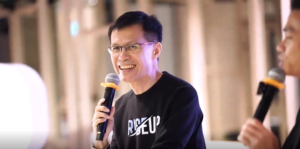
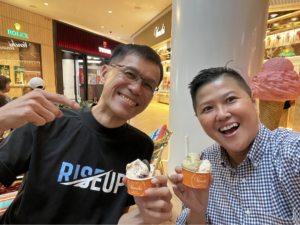
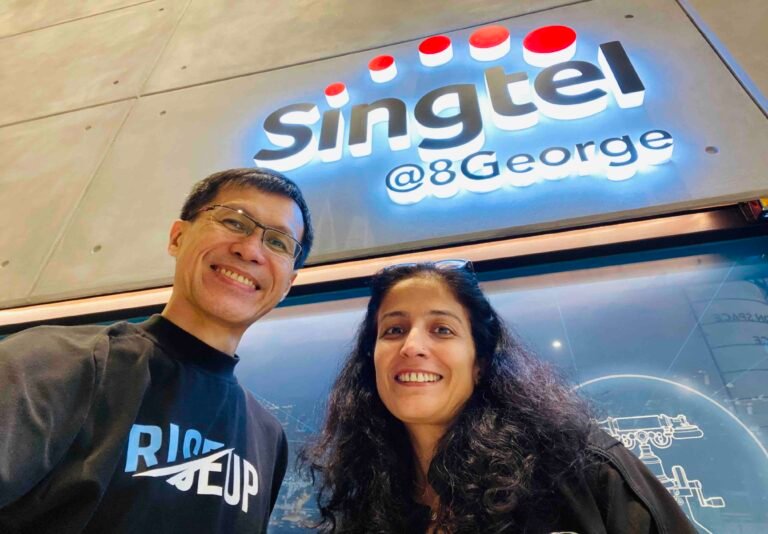
That truth came alive for me during a warm conversation over hot chocolate with Priya Khosla, Head of Singtel Academy. Priya’s leadership philosophy isn’t rooted in hierarchy but in human growth — the intersection of learning, development, and the future of work.
Her perspective reinforced what I believe deeply:
If we want to lead well today, we must let go of ego and embrace human connection, self-work, and intentional care.
From our conversation emerged three truths — three RISEUP principles — that matter more now than ever.
How Does Conscious Growth Shape Human Leadership?
Progress feels good — but real growth doesn’t happen by accident. It requires intention, discomfort, and personal responsibility. As Priya put it, “All of us love progress, but waiting for progress is not going to work.”
This aligns with the foundation of conscious leadership, where leaders take ownership of their development rather than expecting the organization to deliver growth for them.
Conscious growth means:
Volunteering for projects that stretch your capacity
Asking for feedback even when it’s uncomfortable
Viewing every role as a learning lab, not a title
Redefining success as breadth, resilience, and perspective
This is a shift away from the old model where leadership was defined by vertical promotion. In human-centered leadership, growth is multidimensional — skill-building, self-awareness, emotional resilience, and the willingness to step outside comfort zones.
Anchor insight: Conscious growth is about choosing who you want to become, not waiting to be chosen.
How Do Conversations Become a Leadership Superpower?
Traditional leadership rewarded decisiveness, distance, and efficiency. But today’s workforce — especially early and mid-career professionals — expect leaders to be open, emotionally intelligent, and available for real dialogue.
This is where leadership conversations become crucial.
“Conversation is the new engagement,” Priya said — and she’s right.
People now evaluate leaders based on:
how they listen
how they coach
how they hold career conversations
how they create psychological safety
how they invite vulnerability
how they adapt to new expectations
Many leaders were taught to evaluate, not engage — to speak more than they listen. That no longer works.
Human-centered leadership requires mastering the art of dialogue.
Not performance reviews.
Not transactional check-ins.
But ongoing, honest, human conversations that build trust and belonging.
Priya’s reminder echoes deeply:
“Don’t expect the world to fit into your way; instead, flow with the world so that they eventually fit into you.”
Adaptability is the currency of modern leadership.
How Does Mental Fitness Strengthen Human-Centered Leadership?
Leadership is often discussed in terms of strategy, productivity, and outcomes. Yet we rarely talk about the emotional weight leaders and employees carry.
Priya articulated this with clarity:
“It is not just about taking care of ourselves. Everyone has a duty to take care of our loved ones.”
This is mental fitness as a leadership discipline — not an afterthought.
Human-centered leadership acknowledges:
leaders are humans, not machines
personal and professional lives are inseparable
emotional load affects performance
burnout is cultural, not personal failure
wellbeing requires community, not individual endurance
Human-centered leaders model balance by:
Checking in on the person, not just the performance
Building norms for emotional honesty
Removing shame around asking for help
Linking wellbeing to sustainable execution
If leaders expect resilience from their teams, they must first cultivate it within themselves.
Anchor insight: Mental fitness is not a luxury; it is leadership hygiene.
Who Embodies the RISEUP Model of Human Leadership Today?
Every conversation with Priya Khosla leaves me sharper, grounded, and more awake to what leadership should feel like.
She is a leader who:
listens with full presence
speaks with clarity
builds people, not just performance
leads without ego
embodies human growth as a practice
Her work at Singtel Academy is not just about capability building; it is about human development, shaping leaders who can thrive in the future of work.
Priya is a reminder that the most impactful leaders are not defined by authority, but by how they elevate others.
What Does Human-Centered Leadership Ask of Us Now?
Leadership today is shifting from:
telling → to listening
directing → to engaging
controlling → to connecting
performing → to growing
managing → to caring
The leaders who will shape the future are those who practice:
conscious growth
intentional conversation
daily mental fitness
presence over ego
adaptability over rigidity
This is not soft leadership.
This is strategic, human-centered leadership — the kind that builds trust, engagement, creativity, and sustainable performance.
So pause and ask yourself:
Am I intentionally choosing my growth?
Am I holding real career conversations — not just checkboxes?
Am I strengthening my mental fitness daily?
Am I leading from humanity, not hierarchy?
Because when we get these three right — growth, conversation, and care — we’re not just managing work.
We’re shaping a better future. One conversation at a time.
Conclusion: Better Human. Better Leader. Better Business.
Human-centered leadership isn’t a trend — it’s the new baseline for effective leadership in the future of work.
It calls leaders to:
grow consciously
communicate openly
care deeply
lead with presence
prioritize mental fitness
build trust through dialogue
The leaders who embrace this shift won’t just hold positions —
they will shape cultures, empower teams, and create workplaces where people thrive.
Better humans build better leaders.
Better leaders build better businesses.
And better businesses build better worlds.
Frequently Asked Questions
What is human-centered leadership?
How does conscious growth relate to leadership?
Why are conversations important in leadership?
What is mental fitness for leaders
How does human-centered leadership affect team performance?
How can leaders improve their human-centered leadership skills?
How is human-centered leadership different from traditional leadership?
Does human-centered leadership help in the future of work?
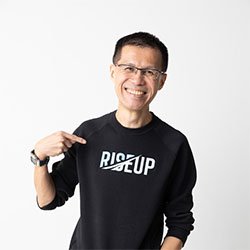
A trailblazer in humanising leadership and building high-resilience teams. As a former United Nations Peacekeeper, he leverages his high-stakes experience to redefine leadership dynamics. With a career distinguished by numerous accolades, Joseph now helps organizations thrive through a human-centric approach, enhancing performance, productivity, and workplace culture.
Related Posts
 Human Centered Leadership: Are We More Human Before Business?
"Human-centered leadership often feels like it’s all about deadlines, numbers, and goals. But what if…
 Are You a Human Leader?
You are a human leader when your decisions, behavior, and communication prioritize clarity, empathy, trust,…
 Be a BETTER OFFLINE HUMAN than Online Human
It is one thing to be given a digital badge on Linkedin. but it…
 Leadership Is A Conscious Effort.
I finally had the opportunity to catch up with Priya Khosla, who is currently heading…