Evolving leadership is the practice of continuously adapting how you lead—your mindset, methods, and relationships—so you stay relevant, human, and effective in a rapidly changing, youth-driven world. It means you grow with people, not just ahead of them.
Leadership today does not happen in a vacuum. It happens in a world where young people navigate more options, more noise, and more pressure than any previous generation. They scroll, filter, and choose what—and who—deserves their attention.
In this reality, sticking to a fixed leadership style is not just outdated, it is risky. Evolving leadership becomes essential: you either keep learning, listening, and shifting… or you quietly check out without noticing.

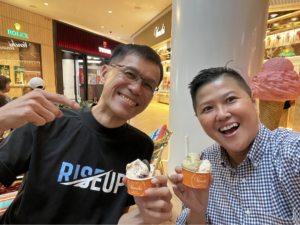
This article explores what evolving leadership looks like in practice, inspired by a conversation with Ivy Lim, Executive Director of SCAPE—someone deeply immersed in shaping spaces with youth, for youth, and by youth.
How Is the Youth Landscape Changing—and What Does It Demand from Leaders?
To understand evolving leadership, you first understand who you are leading.
The youth landscape is not just changing slowly; it is evolving at high speed across three key dimensions:
- More choices – Young people navigate multiple pathways: traditional careers, gig work, content creation, entrepreneurship, activism.
- More pressure – Academic expectations, social comparison, mental health challenges, and financial uncertainty all sit on their shoulders.
- More noise – Endless content, opinions, and opportunities compete for their time and emotional energy.
To lead in this environment, leaders do three things consistently:
- Listen closer than they speak. They do not assume they understand youth needs based on old models.
- Stay curious. They ask fresh questions instead of relying on past formulas.
- Co-create. They design programmes, spaces, and experiences with young people, not just for them.
Evolving leadership starts when leaders accept a simple truth: what worked five years ago is not guaranteed to work today.
How Do You Keep Evolving as a Leader?
To keep evolving, you treat leadership as a fluid practice instead of a fixed identity.
There is no universal leadership style that fits every team, organisation, or generation. A tone, rhythm, or structure that lands well in one context may fall flat in another. Evolving leaders:
- Adapt instead of resist. They update their approach as their people and environment change.
- Listen more, judge less. They create space for voices that are often unheard.
- Fine-tune how they show up. They adjust their communication, presence, and pace based on real feedback.
You can start with three practical questions:
- Where have I stopped learning? Identify one area where you are relying purely on experience, not new insight.
- Who is not being heard? Notice which youth voices are missing from key decisions.
- What do I need to unlearn? Name one habit, assumption, or “this is how it’s always done” belief you let go of.
Evolving leadership is not about becoming someone else. It is about becoming more aware, more responsive, and more human in how you lead.
Why Do Leaders Need a Circle, Not Just a Title?
To sustain evolving leadership, you build a circle that stretches your thinking and supports your growth.
Leadership can feel lonely, especially at the top. You carry expectations, decisions, and pressure that are not always visible to others. Over time, leaders who isolate themselves risk two things:
- Narrow perspective – You only see what you already believe.
- Quiet burnout – You keep functioning on the outside while running on empty inside.
A mastermind circle changes this. It is a group of peers who:
- Challenge your assumptions without attacking your character.
- Offer diverse perspectives that broaden your options.
- Share their own failures and learnings so you do not have to struggle alone.
A strong circle is not a fan club. It is:
- A sounding board for your ideas.
- A mirror that reflects how you truly show up.
- A safety net that catches you when you stumble.
If you lead youth, a mastermind circle that understands the youth space—like the community around RISEUP—helps you stay grounded, relevant, and accountable to the standards you set for others.
What Does It Mean to Engage Youth with Agility?
To engage youth with agility, you meet them where they are—across platforms, spaces, and moments—while staying authentic and human.
Traditional engagement models were often slow and one-directional: announce a programme, expect attendance, deliver content. Today, connection with young people works very differently:
- Multi-touchpoint – Conversations happen online, offline, and often in between: social feeds, DMs, events, communities, and peer circles.
- High-speed – Feedback loops are fast. A misstep can scale quickly; so can a meaningful gesture.
- Authenticity-driven – Youth spot performance and pretense quickly. They respond to leaders who are consistent, honest, and real.
Agile engagement includes:
- Testing small, learning fast. Run small pilots before big programmes; listen to what lands and what does not.
- Inviting ownership. Let young people shape the design, not just attend the event.
- Showing your humanity. Share your own process—your doubts, learnings, and shifts—so they see leadership as a journey, not a distant standard.
Agility here does not mean chasing every trend. It means adjusting your methods without losing your core values.
How Does RISEUP Turn Leadership into a Mindset, Not Just an Event?
To rise up as a leader, you adopt a mindset of curiosity, humility, and continuous evolution.
RISEUP is more than a series of conversations or gatherings. It represents a way of leading that centres on human leadership:
- Better Human. Better Leader. Leadership quality grows out of character, not just competence.
- Curiosity over certainty. You ask, learn, and explore before you prescribe.
- Humility over ego. You are willing to admit what you do not know and invite others to the table.
From conversations with leaders like Ivy Lim—who transitioned from running events and conferences to building youth ecosystems—you see leadership in motion: not a fixed career path, but a constant re-alignment with purpose, people, and impact.
Evolving leadership, in this sense, is not a trend. It is a personal commitment to:
- Grow in self-awareness.
- Deepen how you relate with others.
- Expand the spaces where young people can belong, create, and lead.
How Can You Start Evolving Your Leadership Today?
To evolve your leadership today, you choose one area to shift, one circle to build, and one youth voice to listen to more deeply.
You can begin with three simple practices:
- Audit your leadership style. Ask 5–10 people from different age groups how they experience your leadership in one sentence. Listen without defending.
- Identify your mastermind circle. List 3–5 people who challenge and support you. If that list feels empty, intentionally seek or join a leadership community.
- Create one youth co-creation space. Invite young people to help design or refine one initiative, programme, or event—not as token voices, but as partners.
Small shifts stacked over time create profound change. Evolving leadership is not about overnight transformation. It is about making consistent, intentional moves toward the kind of leader you wish you had when you were younger.
Are You Evolving with the Times—or Waiting for Time to Evolve You?
The real question is not whether the world is changing. It is whether you are changing with it.
Youth expectations will keep shifting. Contexts will keep evolving. New challenges will keep emerging. In that movement, you hold a choice:
- Stay fixed, rely on old patterns, and slowly disconnect.
- Or keep evolving—growing your mindset, expanding your circle, and engaging young people with genuine agility and respect.
Evolving leadership is not about staying relevant for relevance’s sake; it is about staying human, present, and willing to move with others, not just ahead of them.
So ask yourself, honestly:
Are you evolving with the times,
or quietly waiting for time to evolve you out of the room?

A trailblazer in humanising leadership and building high-resilience teams. As a former United Nations Peacekeeper, he leverages his high-stakes experience to redefine leadership dynamics. With a career distinguished by numerous accolades, Joseph now helps organizations thrive through a human-centric approach, enhancing performance, productivity, and workplace culture.
Related Posts
 Leadership is Influence
A leader’s ability to influence people makes him/her a good or a bad leader. Influence…
 Mastering Accountability in Leadership: A Path to Effective Leadership
In the current dynamic business environment, accountability in leadership is more than a buzzword—it’s the…
 Leadership Is A Conscious Effort.
I finally had the opportunity to catch up with Priya Khosla, who is currently heading…
 The Benefits of Online Leadership Training to Thriving in Today’s Workplace
The norm is that leaders face new challenges in communication, team collaboration, change management, and…