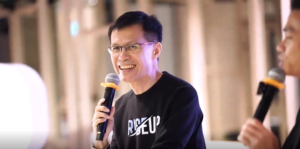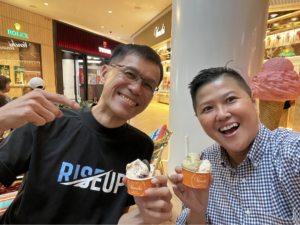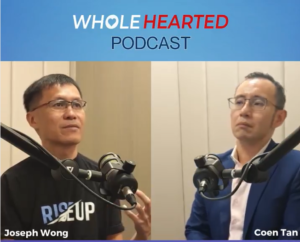
Your job becomes an intentional adventure when you choose to lead, grow, and navigate your career with purpose rather than simply follow a predetermined path.
What if we approached our careers not as a ladder to climb, but as an intentional adventure? This isn’t just a poetic idea — it’s a challenge to rethink how we lead, how we grow, and how we support the people around us. It’s also the core reflection I walked away with after an exceptional conversation with Juliana Ang, the former Chief Human Resources Officer at Venture and Income.
Juliana is one of those leaders who doesn’t need to command a room — she earns attention through clarity, candor, and care. When we caught up recently, I expected a solid professional chat. What I got instead was a series of sharp insights that have been echoing in my mind ever since.
Here’s a deeper dive into that conversation, and the leadership wisdom it surfaced — not just for HR professionals, but for anyone navigating change, culture, growth, and talent retention in today’s evolving work environment.
What Is Talent Retention and Why Does It Matter for Leadership?
Talent retention refers to an organization’s ability to keep committed, capable, and motivated employees for the long term. But it has evolved far beyond perks or compensation packages.
Today, talent retention is rooted in how leaders behave, communicate, and cultivate meaning.
People stay where they feel:
valued
respected
safe
growing
connected
Retention is less about holding people in place and more about creating experiences worth staying for — and worth returning to.
Intentional leadership is the backbone of all of this.
How Does Talent Retention Improve When Leaders Simplify Change?
During major organizational shifts, complexity can overwhelm teams. Juliana shared how she intentionally simplified transformation during her leadership tenure.
“Don’t overcomplicate—focus on what truly matters.”
Her approach centered on clarity, accessibility, and forward-focused capability building. These behaviors reduce anxiety — a major cause of attrition during periods of change.
People don’t leave because organizations evolve.
They leave because communication collapses, leaders disappear, or confusion grows.
When leaders simplify change, they strengthen safety — a core pillar of talent retention.
How Does Talent Retention Strengthen When Work Becomes a Community?
Juliana described her industry as surprisingly tight-knit — a network where competition supports growth rather than isolation.
This reveals a deeper truth about retention:
People stay longer where they feel they belong.
Community reinforces:
pride
loyalty
resilience
shared meaning
When employees experience trust and connection, engagement rises — and turnover drops.
Community is one of the most underestimated drivers of long-term talent retention.
How Does Talent Retention Evolve Through the Idea of Return-tion?
Traditional retention assumes people should stay permanently. Modern careers don’t work that way.
Enter Return-tion — the concept of creating such a positive environment that people eventually return, even after leaving.
Juliana connected with this instantly. She has seen many professionals leave her organization for timing, personal growth, or transitions — only to return stronger and more committed.
This shift reframes retention from:
“How do we keep people?”
to
“How do we build a culture people want to come back to?”
Her reminder is powerful:
“People don’t just join organisations. They join leaders. And they come back for the ones who made them feel seen and supported.”
Return-tion is not the opposite of retention.
It is the evolution of it — relationship-driven, long-term, and leadership-dependent.
What Do These Insights Reveal About Intentional Leadership and Talent Retention?
Juliana’s presence — calm, discerning, ego-free — reflects the foundation of lasting retention: leadership that creates intention rather than pressure.
The most effective leaders are not defined by dramatic decisions or grand strategies. They are defined by how people feel around them — supported, understood, and trusted.
This is where talent retention truly lives.
At RISEUP, this is embodied in “Better Human. Better Leader.”
Because when leaders elevate their humanity, they elevate the organization’s ability to keep and grow exceptional people.
Here’s the question every leader should be asking themselves:
Are you building a job people simply work in… or an adventure they want to be part of — again and again?
Your answer determines the future of your retention.
Summary
The conversation with Juliana Ang reveals one central truth:
Talent retention is no longer about policies. It’s about people.
Organizations keep talent when leaders:
simplify complexity
communicate clearly
build community
support growth
create psychological safety
maintain relationships even after people leave
Retention isn’t a program — it’s a leadership approach.
Return-tion isn’t a trend — it’s the long-term outcome of leading with intention.
If leaders want people to stay, contribute, and return, they must design workplaces where clarity, connection, and care are not exceptions — but the culture.
Talent stays where leadership feels intentional.
And talent returns where leadership feels human.
Frequently Asked Questions
What is talent retention in simple terms?
Why do employees leave even when pay is good?
What is the role of leaders in talent retention?
What is “Return-tion”?
How does communication impact talent retention?
Does community really affect retention?
What is the biggest mistake organizations make about retention?

A trailblazer in humanising leadership and building high-resilience teams. As a former United Nations Peacekeeper, he leverages his high-stakes experience to redefine leadership dynamics. With a career distinguished by numerous accolades, Joseph now helps organizations thrive through a human-centric approach, enhancing performance, productivity, and workplace culture.
Related Posts
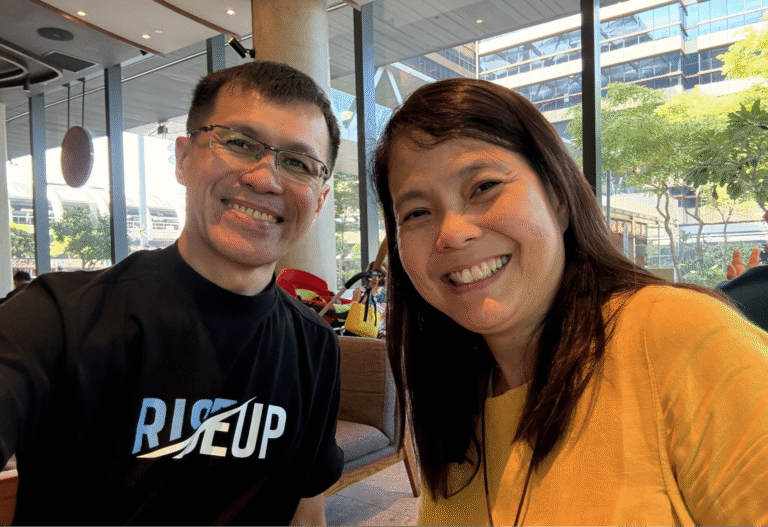 Intentional Leadership: The Power of Leading with Clarity, Purpose, and Presence
When Joseph Wong, founder of RiseUP Global, met Juliana Ang, former Chief Human Resources Officer…
 Leadership is Influence
A leader’s ability to influence people makes him/her a good or a bad leader. Influence…
 Mastering Accountability in Leadership: A Path to Effective Leadership
In the current dynamic business environment, accountability in leadership is more than a buzzword—it’s the…
 Leadership Is A Conscious Effort.
I finally had the opportunity to catch up with Priya Khosla, who is currently heading…