
In leadership, resilience is often misunderstood. It’s not just about “bouncing back” — it’s about thinking clearly, acting consistently, and growing through continuous pressure.
In simple terms, a resilient person stays steady under stress, adapts quickly to change, and uses challenges as learning moments instead of being defeated by them.
In executive leadership, resilience is not emotional toughness — it is psychological agility backed by deliberate practice.
What Does It Mean to Be a Resilient Person?

A resilient person doesn’t deny difficulty; they engage with it intelligently. They recognize challenges within the system they lead, not as threats to their identity.
In leadership science, resilience integrates three dimensions:
- Cognitive: How one perceives and interprets a challenge
- Emotional: How one regulates internal responses
- Behavioral: How one maintains consistency under prolonged stress
Imagine a senior manager leading through a merger. Deadlines shift, teams feel uncertain, and the future is unclear. A reactive leader might withdraw or overcontrol. A resilient one stays calm, communicates transparently, and maintains credibility through clear priorities.
That’s not abstract strength — it’s applied resilience.
How Do Resilient People Think Under Pressure?
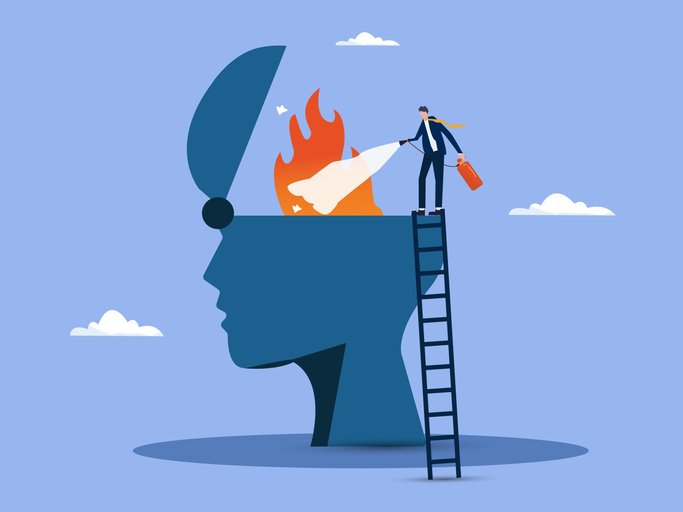
Resilient people operate with a distinct cognitive style. Under pressure, they slow their thinking instead of reacting impulsively.
They think differently by:
- Separating personal identity from performance results.
- Viewing stress as data that reveals system weaknesses.
- Concentrating effort on what’s within their control.
- Delaying reaction until context improves.
- Translating setbacks into practical adjustments.
For example, an executive receiving negative feedback in a board review doesn’t see it as a personal hit. They treat it as a signal — analyzing what’s actionable versus what’s emotional. This mental distancing sustains composure and fuels learning.
How Do Resilient Leaders Behave Under Prolonged Stress?

Behavioral resilience shows up in predictable actions when conditions stay unpredictable.
Resilient leaders are consistent in tone, calm in updates, and structured in decision-making patterns. This predictability builds reliability — the trust currency of teams.
Think of a department head navigating budget cuts. Instead of reacting in panic, they brief their team with realism, redistribute workloads strategically, and check in on morale. People notice steadiness — and mirror it.
That’s how resilience becomes visible leadership.
What’s the Difference Between a Resilient Person and a Mentally Tough Performer?

At first, toughness and resilience can look similar — both perform well under stress. But the difference appears over time.
A mentally tough performer often:
- Delivers strong results under short-term pressure,
- Projects confidence and control, but
- Avoids high-stakes emotional issues and quietly burns out.
A resilient person, in contrast:
- Engages authentically in difficult conversations,
- Processes emotion instead of burying it,
- Recharges instead of running on exhaustion, and
- Transforms feedback into better leadership habits.
A real-world contrast:
- The “tough” VP who drives projects through deadlines but alienates their team.
- The “resilient” VP who sustains pace while preserving relationships and morale.
The first delivers results; the second builds capacity. That’s the distinction RISEUP leaders must embody.
How Is Growing Through Stress Different From Simply Coping?

Coping keeps you functional. Growing makes you better.
Coping says: “Get through the week.”
Growing says, “What will this challenge teach me about leading differently?”
Resilient leaders don’t just recover from stress — they extract strategic insight from it. They regularly ask:
- What pattern is emerging here?
- Which assumptions did this event challenge?
- What new skill or discipline does this moment require?
Growth-oriented resilience transforms stress into a learning loop. Over time, this mindset compounds leadership capacity.
How Does Burnout Differ From True Resilience?
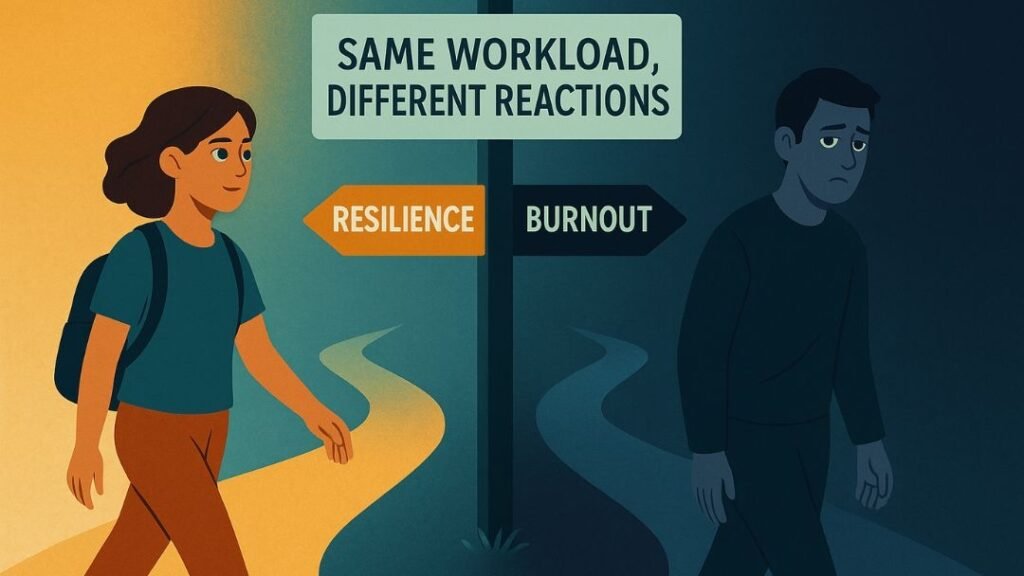
Burnout is a system in deficit — energy drains faster than it’s replenished. Resilience is a balanced equation: performance paired with renewal.
Resilient executives design a personal rhythm: focused work sprints paired with structured recovery (mental breaks, physical rest, reflection time). For example:
A COO implementing review-free Fridays or post-launch rest cycles isn’t being “soft.” They’re engineering sustainability.
Performance capacity grows through renewal, not depletion. Burnout signals the absence of this rhythm.
Why Do Resilient Leaders Build Stronger Teams?

Teams don’t absorb instructions; they absorb emotional state.
When a leader remains stable, teams feel safe. When a leader unravels, teams fragment.
Resilient leaders set the climate for trust because:
- Their composure reduces collective anxiety.
- Their openness invites psychological safety.
- Their realism grounds effort in truth, not denial.
For instance, during a system outage, a calm CTO who communicates updates honestly will stabilize both engineers and executives faster than a panicked one. Team resilience begins where leader composure lives.
What Are the Organizational Benefits of Building Resilience?
At scale, resilience becomes a strategic operating advantage.
Organizations that institutionalize resilience through leadership training and team systems outperform reactive cultures, especially under volatility.
Evidence-based studies show that resilient organizations:
- Recover from disruptions faster,
- Retain high performers longer, and
- Sustain decision quality under stress.
For companies building future-ready leaders, resilience is no longer optional — it’s operational.
Why Does Resilience Outperform Raw Drive in Leadership?
Ambition accelerates; resilience sustains.
Driven individuals often surge early but wear down quickly. Resilient leaders regulate energy, emotion, and focus, allowing them to perform with steady excellence year after year.
They turn volatility into feedback, fatigue into rhythm, and stress into strategic awareness. That’s evidence-based endurance — the leadership currency of the modern era.
Final Insight: Why Resilience Defines 21st-Century Leadership
Resilience is not a personality trait; it’s a performance system — built on reflection, discipline, and adaptive thinking.
A resilient person doesn’t just bounce back; they lead forward — translating adversity into alignment, and stress into wisdom.
This is the RISEUP advantage: turning crisis competency into leadership infrastructure that sustains clarity, composure, and collective strength.
FAQs About Resilient People and Leadership Resilience
1. What is a resilient person in simple terms?
2. What traits make someone resilient?
3. Can resilience be learned?
4. Is resilience the same as toughness?
5. Why is resilience important for leaders?

A trailblazer in humanising leadership and building high-resilience teams. As a former United Nations Peacekeeper, he leverages his high-stakes experience to redefine leadership dynamics. With a career distinguished by numerous accolades, Joseph now helps organizations thrive through a human-centric approach, enhancing performance, productivity, and workplace culture.
Related Posts
 Building Resilient Teams - Featured On The Straits Times (5 May 2016)
Building Resilient Teams Imagine you have a crisis on hand, and you need your team…
 Weakness Are Strength in Disguise - How our weakness can reveal powerful qualities hidden from us
No matter how great a personality you have, how many supposedly innate strengths you possess,…
 What Is Workplace Mental Health and Why Does It Start With Your Space?
Workplace mental health begins with the environment you occupy every day—because your mind cannot thrive…
 10 Must-Have Traits You’ll Learn in Leadership Training for Educators
The Leadership Gap in Education Educators play a pivotal role in shaping students' futures, yet…
 Self-Esteem: Influences, Traits, and How to Improve It
Self-esteem is your overall evaluation of self-worth—formed by experiences, beliefs, and context—that shapes motivation, relationships,…
 Key Traits That Define a Successful Team and Foster Collaboration
Creating a successful team involves more than just gathering skilled individuals. In this article, discover…