You are a human leader when your decisions, behavior, and communication prioritize clarity, empathy, trust, and purposeful connection over hierarchy and authority.
Human leadership is a leadership approach rooted in empathy, clarity, trust, and genuine connection. Rather than relying on authority or hierarchy, it prioritizes relationships, communication, human behavior, and the development of human potential. It aligns deeply with human-centered leadership, human relations theory, and the modern shift toward purpose-driven performance.
Human leadership matters today because organizations are more complex, and people crave meaning, psychological safety, and leaders who understand the human side of work—not just the operational one.
How a Simple Lunch Revealed the Power of Human Leadership?
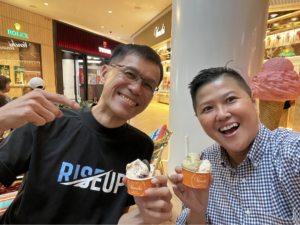
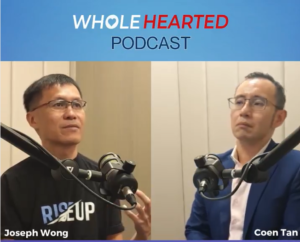
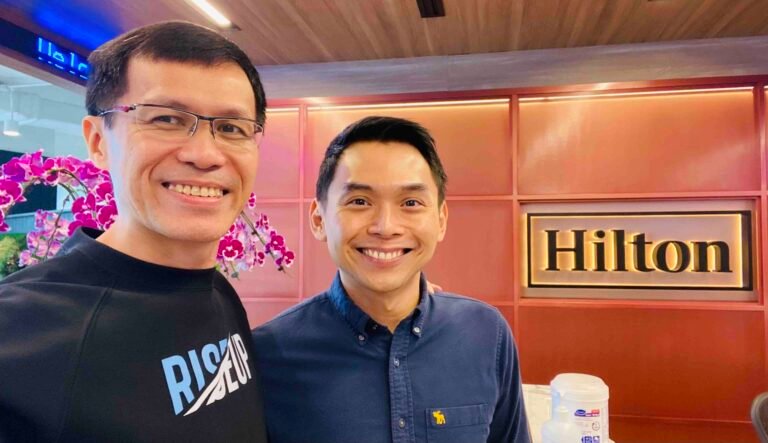
This became especially clear to me during a lunch meeting with Joseph Y., a senior leader in Governance and Infrastructure at AIA. We had been orbiting similar leadership conversations online, both exploring how to bring more humanity into the future of work. When we finally met, the discussion didn’t just confirm the need for human leadership—it deepened my understanding of it in ways I didn’t expect.
That shared moment of reflection reminded me that leadership isn’t about frameworks or strategy decks.
Leadership is human—and the best lessons emerge from human moments.
How Does Human Leadership Simplify Influence and Communication?
One of the most underrated aspects of leadership is influencing upward. It’s also one of the hardest.
In hierarchical structures, people often try to sound smarter, more strategic, or more technical. But real influence happens when leaders simplify—not complicate—their message.
This is where effective human relations in leadership become essential.
Human leadership requires:
clear communication
empathy
intentional framing
understanding how people absorb information
These are the same human skills in leadership taught in modern human resource leadership programs, where communication clarity is considered a strategic capability—not a soft skill.
When I conducted a leadership session with senior manufacturing leaders, many admitted they had no real understanding of what certain departments did. Once we stripped away jargon and explained processes through a human lens, understanding finally landed.
Human leadership shows up when you simplify to connect—not when you complicate to impress.
How Does Trust Reveal the Presence of Human Leadership?
A question I often ask leaders:
If someone in your team saw you from 100 meters away, would they walk toward you or walk away?
This simple scenario exposes the foundation of human leadership—trust.
Trust is the core ingredient in:
emotional intelligence in leadership
managing up
leadership behavior that builds human capital
human resource leadership development
Formal assessments can measure competencies, but real leadership is revealed in the unscripted moments of presence, approachability, and emotional steadiness.
People don’t follow titles.
People follow those who make them feel safe, valued, and respected.
Human leadership is trust in motion.
How Do Workplace Relationships Shape Human Leadership?
Joseph shared an insight I won’t forget:
“Office politics? It’s just relationships — either healthy or unhealthy.”
This reframe mirrors decades of human relations leadership theory, where informal networks carry more influence than formal structures.
Human leadership recognizes that:
connection precedes collaboration
relationships precede performance
culture precedes results
Leaders often think they need better processes, but what they truly need is better relational trust.
Healthy relationships turn workplace politics into alignment.
Unhealthy relationships turn them into resistance.
Human leadership begins with human care—not performative kindness, but genuine concern for people’s stories, challenges, and aspirations.
What Is Human-Centered Leadership in Practice?
Human-centered leadership is more than a style—it is a philosophy grounded in:
compassion
clarity
deep listening
psychological safety
connected purpose
It overlaps with several leadership frameworks:
adaptive leadership (human behavior adaptation)
human capital leadership strategies
strategic human resources leadership
leadership in human behavior organizations
In human-centered leadership, people are not resources—they are relationships, potential, purpose-carriers, and contributors.
This is why human resource management plays a crucial role in leadership development. HR leaders today shape:
culture
capability building
leadership pipelines
relational dynamics
performance connected to purpose
HR doesn’t just manage systems—they steward human potential.
How One Leader Demonstrates Human Leadership?
During our conversation, what stood out about Joseph Y. was not his technical expertise or the weight of his responsibilities—but his humanity.
He practices human leadership through:
calm presence
clear thinking
thoughtful listening
grounded decision-making
connection over complexity
These reflect the core functions of leadership in human resources, where the goal is to elevate performance not through pressure, but through clarity and care.
Joseph is a reminder that the most powerful leaders are not always the loudest ones—they are the most intentional.
How Is Human Leadership Shaping the Future of Work?
If leadership used to be about authority, today it is about approachability.
If leadership used to be about control, today it is about connection.
If leadership used to be about tasks, today it is about trust.
Human leadership is becoming the operating system for modern organizations because:
humans follow humans
meaning drives performance
trust drives engagement
relationships drive results
clarity drives alignment
This aligns with emerging perspectives in the future of work, where purpose, psychological safety, and relational intelligence increasingly define effective leadership.
We’re not moving into a new era of leadership.
We’re going back to what leadership was always meant to be: human.
Summary
Human leadership matters because organizations are no longer built on efficiency—they are built on relationships, trust, and human capital.
Human leadership:
simplifies communication
strengthens trust
builds healthier relationships
elevates human potential
improves leadership behavior
increases human capital performance
aligns purpose with results
If the future of work demands adaptability, empathy, and clarity, then human leadership is no longer optional—it is essential.
Better humans create better leaders.
Better leaders create better workplaces.
Better workplaces create better futures.
Human leadership is not a trend. It is the foundation of work that works.
Frequently Asked Questions
What is human leadership?
What is human-centered leadership?
What are human skills in leadership?
How does human resource management support leadership?
How are human relations connected to effective leadership?
How does leadership increase human capital?
What is human resource leadership?
What is leadership in human behavior?
How do HR managers influence leadership development?
How does human-centered leadership connect purpose to performance?
Is artificial intelligence a threat to human leadership?
Why is leadership important in human resources?
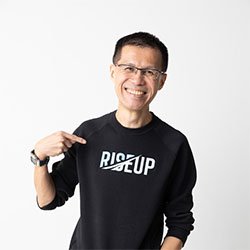
A trailblazer in humanising leadership and building high-resilience teams. As a former United Nations Peacekeeper, he leverages his high-stakes experience to redefine leadership dynamics. With a career distinguished by numerous accolades, Joseph now helps organizations thrive through a human-centric approach, enhancing performance, productivity, and workplace culture.
Related Posts
 Be a BETTER OFFLINE HUMAN than Online Human
It is one thing to be given a digital badge on Linkedin. but it…
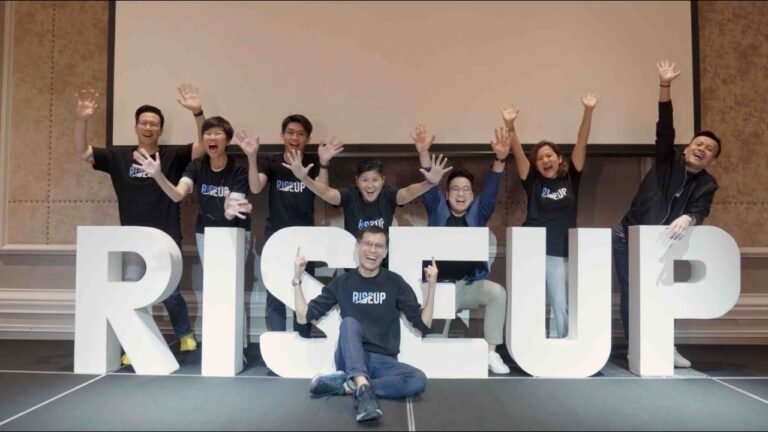 Human Centered Leadership: Are We More Human Before Business?
"Human-centered leadership often feels like it’s all about deadlines, numbers, and goals. But what if…
 Leadership is Influence
A leader’s ability to influence people makes him/her a good or a bad leader. Influence…
 Do You Have The Courage To Empathise As a Leader?
It was great to catch up with Lincoln Kee, the Senior Director of Talent and…